Daily Health | Wellness • Science • Research

“Silence Is Closer Than You Think – But There’s One Detail Few People Know…”

“Scientists have discovered that tinnitus and hearing loss don’t actually start in the ears… but in an invisible wire that connects your hearing to your brain.”

And if you’ve ever wondered why nothing seems to work against tinnitus, here’s a story that might sound familiar…

Imagine a 45-year-old father, exhausted after a long day, just trying to enjoy a quiet moment with his family. But instead of silence, all he hears is a piercing whistle inside his own head. He has already tried teas, medications, therapies, hearing devices… nothing worked.

Deep down, he starts to lose hope. He thinks about giving up, but then he looks at his kids and holds on – he can’t fail them now.

If you suffer from tinnitus, you probably recognize yourself in many of these situations:

🔴 Constant ringing (whistle, buzz, or hiss that never stops).

🔴 Headaches and mental fatigue.

🔴 Sleepless nights, insomnia, and irritability.

🔴 Memory problems and trouble focusing.

🔴 Fear of developing something worse, like dementia or Parkinson’s.

Why Common Treatments Fail

Most of the known solutions don’t actually address the real cause.

Scientific research confirms that hearing loss is not only related to age or environment. According to a study published in PubMed (Azaiez et al. 2018), hearing loss can be:

  • Conductive, sensorineural, or mixed
  • Congenital, pre-lingual, or age-related
  • Associated with genetic factors (autosomal dominant, recessive, X-linked, or mitochondrial)

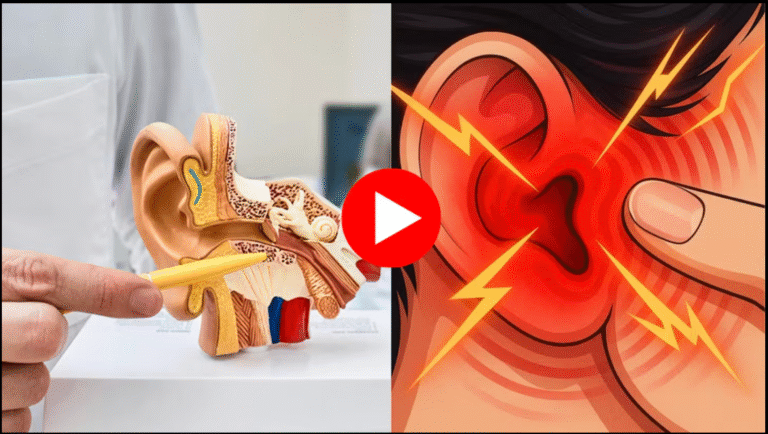
 In other words: it’s not just the ear. Many times, the problem starts in a microscopic wire that connects the ear to the brain – the neural junction.
And when that wire fails, the signals arrive distorted, creating the phantom noise we call tinnitus.

What Researchers Have Found About Tinnitus

Researchers from Harvard, the University of Iowa, and Auckland warn: “Repairing the neural connection between the ear and the brain is essential to silence tinnitus and protect memory.”

According to studies (Lanska et al. 1987), the mechanics of tinnitus go beyond the ear:

  • In most cases, it comes from damage to the cochlea (inner ear).
  • In other cases, from the nerve between the ear and the brain (vestibular nerve).
  • It may even result from brainstem injuries and, rarely, from the brain itself
  • But here’s the most important part: even when it begins in the ear, the perception of tinnitus is actually generated in the brain.

That explains why most treatments fail — they attack the ear, but not the real cause: the invisible neural wire that connects sound to the mind.

⚠️ The Invisible Danger

Research shows tinnitus is linked to problems with concentration, memory, and sleep.

Experts warn: the longer tinnitus persists, the greater the impact on the brain and emotional health.

📊 The Size of the Problem

Over 25 million Americans report living with chronic tinnitus.

Many describe how the constant noise affects sleep, mood, and overall quality of life.

🕒 The Hidden Side

Tinnitus is not just “a ringing in the ear.”

For many, it brings a sense of frustration and even social isolation.

That’s why doctors consider it essential to address the root cause as soon as possible.

Testimonials

Carlos M., 47 – Texas

“I didn’t know what else to do. The ringing kept me awake night after night, and at work I could barely focus. My wife said I was always irritable. When I found this solution, I thought it was just another attempt. But within a few weeks, I started to feel a calm I hadn’t felt in years. Now I can sleep through the night without being woken up by the noise.”

Mark T., 52 – California

“I lived with that constant whistle in my ears for years. I tried supplements, hearing aids, even therapy… nothing worked. I had already lost hope. But this discovery was different. For the first time in a long time, I felt silence again. It’s hard to explain — it feels like I got my life back.”

John P., 44 – Florida

“Tinnitus was destroying me. Stress, exhaustion, and I even thought I was going to lose my family because I was always in a bad mood. I needed something that actually worked. This approach was the first that attacked the root cause. The noise went down, my memory improved, and even my energy came back. I finally have hope.”
FAQ

1. Is there a cure for tinnitus?

Many doctors say there is no definitive cure, but recent research shows the problem can be treated at the root.

2. Is this method safe?

Yes, it’s based on scientific studies and has been tested on thousands of people living with tinnitus.

3. Does it work for any age?

Yes, both younger and older people report improvements, regardless of how long they’ve lived with tinnitus.

4. What if I’ve already tried hearing aids or supplements?

It doesn’t matter if you’ve tried everything. The video explains why these solutions fail and reveals the real path to silencing tinnitus.